
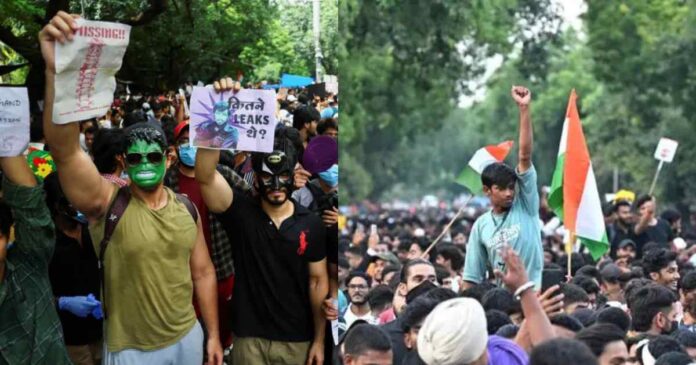
Dharmendra Pradhan’s resignation is far more than the exit of one Union Minister. It marks the first time the Modi government has been compelled into a clear political retreat by a spontaneous youth-led movement. Unlike the year-long farm protests that eventually forced a policy rollback, this turnaround was swifter, more personal, and driven entirely by young Indians.
Senior journalist Rajdeep Sardesai breaks down six important political lessons that emerge from this Gen Z revolt.
1. Never Underestimate the Power of India’s Young
For years, India’s youth were dismissed as politically disengaged — glued to smartphones and obsessed with reels rather than real issues. The Cockroach Janta Party (CJP) protests completely shattered that stereotype.
Ironically, the same social media platforms once mocked as distractions became the primary tools of mobilisation. Instagram reels, memes, WhatsApp groups, and YouTube livestreams spread information faster than any political party machinery.
This was not a movement led by veteran activists or established student organisations. It was driven by ordinary young faces whose futures had been repeatedly disrupted by paper leaks, examination scandals, and administrative failures. Their anonymity became their greatest strength. With no political careers to protect and no party bosses to please, they spoke with the confidence of citizens who felt they had nothing left to lose.
Governments everywhere should remember: ignore young people at your own peril, especially when frustration turns into collective action.
2. India’s Education Crisis Has Finally Become a Political Issue
Paper leaks, delayed results, coaching centre exploitation, and skyrocketing education costs were long treated as isolated problems. Students would protest briefly and then move on because another exam was always waiting.
This time was different. The protests connected thousands of individual grievances into one powerful narrative — that India’s education system is failing millions of aspirational young people and their families.
For the first time, the quality and credibility of the education system — not just access to it — has become a genuine political issue capable of influencing elections. Every government celebrates India’s demographic dividend. It must also confront the demographic anxiety that comes with it: millions of ambitious youth chasing limited quality opportunities.
3. Governments Cannot Govern Through Denial Forever
The Modi government’s usual response to uncomfortable protests has become familiar: dismiss critics, question motives, allege conspiracies, or wait for the news cycle to move on.
That strategy failed here. Attempts to brand protesters as politically motivated or “anti-national” collapsed because the issue was too real. Almost every Indian family knows someone preparing for competitive exams. Parents understand the emotional and financial cost of repeated failures caused by systemic dysfunction rather than lack of merit.
Governments earn credibility by acknowledging mistakes early, not by pretending they don’t exist. By the time accountability was accepted, and dialogue began, public trust had already started eroding.
4. Leadership Can Be Horizontal, Not Hierarchical
One of the most striking features of the movement was the absence of a single towering leader. Instead, dozens of young organisers emerged organically. Students, researchers, and volunteers coordinated protests, compiled evidence, handled media, and negotiated with ministers.
This is very different from older political movements built around charismatic personalities. The digital generation is comfortable with distributed leadership. Authority comes from credibility and competence rather than age or position. Traditional political parties still built around hierarchy, patronage, and personality cults would do well to understand this shift.
5. Democracy Still Works When Citizens Refuse to Give Up
In recent years, many Indians have begun to believe that protests achieve little, institutions rarely respond, and governments simply outlast public anger.
This movement offered a different message. Peaceful, persistent, and disciplined mobilisation forced those in power to listen. It required courage, organisation, and remarkable restraint despite provocation. The political climax came when the Prime Minister himself chose to address the nation through a late-night video — an acknowledgement that the voices from below could no longer be ignored.
The resignation of one minister will not magically fix India’s education system. Paper leaks will not disappear overnight. Structural reform remains the real test. But symbolic victories matter in democracies. They remind citizens that accountability is still possible.
6. The Monopoly of Narratives Has Been Broken
From print to television to digital platforms, the shift in media power is now clear. For weeks, a large section of mainstream media barely mentioned the CJP protests. It was almost as if the movement had been invisibilised.
Yet the protest gathered momentum despite attempts to ignore or demonise it. An alternate space was created in the digital ecosystem, with Instagram becoming the preferred medium for interaction and amplification.
Never again dismiss an Instagram reel as just another reel. In the digital age, politics no longer begins only in party offices or television studios. Sometimes it begins with a 30-second video carrying the image of a cockroach — the ultimate survivor — and ends by changing the political conversation.
Conclusion
The Gen Z revolt has shown that while parts of India may be shining, another India is restless, anxious, and unwilling to remain silent any longer. Every government should pay attention to this “other” India instead of becoming a prisoner of its own “New India” rhetoric.
India’s youth are not asking for miracles. They are asking for fairness, competence, and dignity. They want examinations they can trust, institutions they can believe in, and governments that treat them as citizens rather than statistics.

