
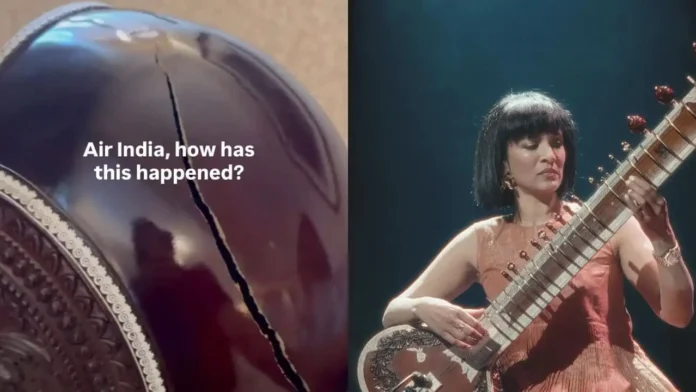
Renowned sitarist Anoushka Shankar, the Grammy-nominated daughter of legendary musician Pandit Ravi Shankar, has sparked a storm of criticism against Air India after her prized sitar arrived damaged from a recent flight. In a poignant Instagram video shared in early December 2025, Anoushka revealed the extent of the harm to her instrument, expressing profound disappointment and frustration with the airline’s handling. The incident, which she described as a first in 15-17 years of frequent travel, has ignited discussions on the vulnerabilities musicians face when transporting delicate cultural artifacts. If you’re here for the Anoushka Shankar sitar damaged story that’s trending on December 6, 2025, this isn’t just a travel tale – it’s a timely reminder of the emotional and professional toll such mishaps take on artists, amplified by her ongoing Grammy buzz. From the video’s raw revelation to Air India’s apologetic assurance of an investigation, relive the episode that’s got fans rallying for better protections for performers’ prized possessions.
The Heartbreaking Video: Anoushka’s Discovery and Disbelief

Anoushka Shankar, 44, took to Instagram in early December 2025 to share a video that captures the moment she uncovered the damage to her sitar upon returning from a flight with Air India. The instrument, a symbol of her illustrious heritage and career, showed a long, deep crack along its lower rounded end – a devastating sight for any musician. In the clip, Anoushka’s voice trembles with a mix of shock and sorrow as she explains her initial confusion:
“First I was just looking at the top of my sitar and felt like it was really out of tune. After I tuned it and picked it up to play, that’s when I realised.”
Her frustration peaks as she addresses the airline directly:
“This was my first time flying Air India after a long time. You’re the country this music belongs to, and this is the first time anything like this has happened to my instrument in 15 or 17 years. How have you done this? I have special cases. You charge a handling fee and yet you’ve done this.”
The irony stings sharper for Anoushka, a global ambassador of Indian classical music, who notes that she’s flown countless times on international carriers “without a single peg going out of tune.”
“I’m devastated and deeply troubled by @airindia’s handling of my sitar. How can such damage occur without negligence?” she questions, tagging the airline in her post.
Have a look at the whole post
The video, raw and unfiltered, quickly amassed thousands of views, with Anoushka’s followers expressing outrage and solidarity. It’s a poignant reminder of the emotional bond artists share with their instruments – for Anoushka, the sitar isn’t just wood and wire; it’s a legacy from her father, Pandit Ravi Shankar, and a tool for her soul-stirring performances.
Air India’s Apology and Assurance: Probe Launched, Guest Engagement Promised
Air India wasted no time responding to the public outcry, issuing a statement through their spokesperson that acknowledged the incident and expressed regret.
“We are concerned to learn of a valued guest’s experience with their musical instrument on a recent flight with us. We understand its cultural and personal significance, and deeply regret the distress this incident may have caused.”
The airline emphasized their commitment to resolution, stating they are “currently unable to ascertain the cause of the damage” but are “engaging with the guest to address the issue, while investigating further to understand where the damage may have occurred, as multiple stakeholders and agents are involved in the handling of such items.”
This multi-party probe highlights the complexities of air cargo logistics, where instruments like sitars – often requiring special cases and fees – pass through baggage handlers, ground staff, and even security checks. Air India’s proactive stance aims to rebuild trust, but Anoushka’s fans are calling for more: Transparent policies for fragile freight and compensation that covers repairs for such irreplaceable items.





The Sitar’s Sacred Significance: A Cultural Icon Under Siege
The sitar, a stringed wonder synonymous with Indian classical music, holds a hallowed place in Anoushka’s world – a direct link to her father’s revolutionary raga revivals and her own Grammy-nominated album Chapter III: We Return to Light, which earned nods for the 2026 awards. Touring globally with this fragile fretboard requires not just skill but safeguards – reinforced cases, insurance, and airline assurances that often fall short. Anoushka’s ordeal echoes similar stories from musicians like Vishwa Mohan Bhatt, whose Mohan Veena cracked mid-flight in 2019, underscoring the systemic snags in protecting cultural cargo.
For Anoushka, whose concerts kick off January 30, 2026 in Hyderabad, the damage is more than material – it’s a momentary mar on her musical mission. Fans fear it could delay her discography, but her resilience shines through: “Music will heal this too,” one supporter commented, capturing the community’s collective cry for care.
Fan Fury and Fellow Musicians’ Solidarity: “Even an Indian Instrument Isn’t Safe”
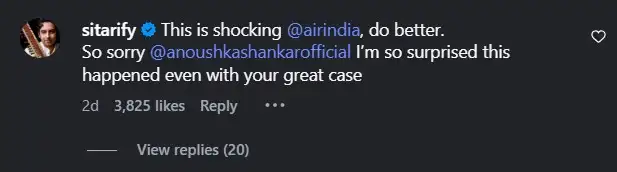
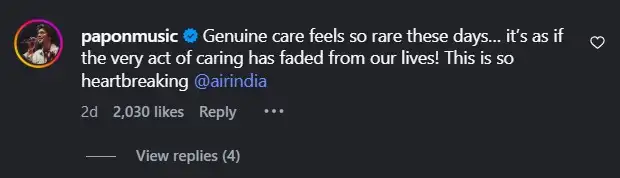
The backlash has been swift and vocal, with Anoushka’s post drawing an outpouring of empathy from the music world and beyond. Fellow artists like A.R. Rahman shared a simple “Heartbreaking” on his stories, while netizens flooded comments with calls for accountability: “Air India, this is cultural negligence – fix it!” one wrote, tagging the airline. Others shared their own horror tales, from broken veenas to vanished violins, turning Anoushka’s solo sorrow into a symphony of support.
By December 6, 2025, the video’s views have surpassed 500K, trending under #ProtectMusicalInstruments and #AnoushkaShankar – a digital drumbeat demanding change. Travel experts are weighing in too, advocating for “musician-friendly” policies like dedicated handling zones at airports.
Anoushka Shankar sitar damaged incident? A crack in the cultural canvas. What’s your take on airline accountability for artists? Or got a travel tale with treasured tools? Share in comments – let’s tune into the conversation.

