
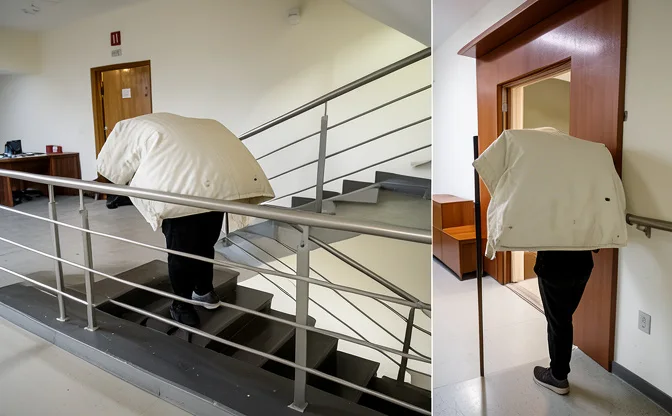
In yet another viral video raising questions about how India treats its delivery workers, a delivery agent is seen hauling a massive parcel up six floors of a residential building after allegedly being refused permission to use the lift.
The clip, shared on X (formerly Twitter), shows the worker from a moving company slowly climbing the staircase with a bulky package strapped to his back. At several points, he appears to struggle to keep his balance under the weight, but continues upwards until he finally reaches the flat on the sixth floor.
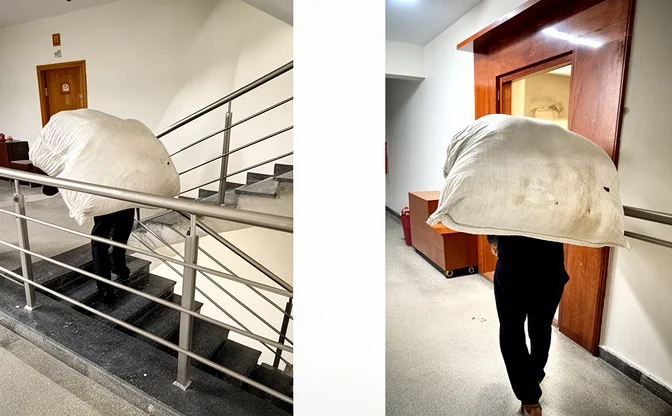
When he tries to manoeuvre the oversized parcel through the doorway, he stumbles again, and a voice from inside the apartment can be heard telling him to be careful. According to the caption shared with the video, packers and movers were not allowed to use the building’s elevator, even though it was reportedly working, so the deliveryman had no choice but to take the stairs.
Online outrage over “inhumane” housing society rules
Once the clip started circulating, social media users slammed the housing society’s reported rule that bans delivery staff, packers and movers from using the lift. Many called the treatment “inhumane”, “discriminatory”, and an example of how cheaply labour is valued when it comes to gig workers and support staff.
Watch the video here:
Commenters pointed out that while residents enjoy the convenience and safety of lifts, the workers delivering their goods are often denied the same basic access—even when they are the ones handling the heaviest loads. Several users argued that forcing someone to carry such a weight up multiple floors risks serious injury or even a heart attack, and that those who made this rule should be held accountable.
Some defend the rule, citing lift damage and maintenance
Not everyone fully agreed with the outrage, though. A few users tried to defend the housing society’s stand, saying that many buildings either lack a separate service lift or have passenger lifts with limited capacity that can get damaged by frequent heavy loads. They claimed some societies restrict the use of lifts by packers and movers to avoid breakdowns and repairs, or require prior permission before large items can be transported.
However, even those who mentioned maintenance concerns agreed that there needs to be a humane alternative. If a building does not have a dedicated service lift, critics said, residents’ associations and municipal authorities should work together on safer solutions instead of placing the entire physical burden on low‑paid workers.
Bigger questions about gig workers, lift access and the dignity of labour
This isn’t the first time a delivery agent’s viral video has triggered debate on how gig workers are treated inside gated communities and high‑rise societies in India. From strict timing rules to bans on using main entrances or lifts, many policies are framed without consulting the workers who are most affected by them.
The latest clip has renewed calls for clearer guidelines on:
- Whether delivery staff and packers should be allowed in passenger lifts when service lifts don’t exist
- Minimum safety standards for handling heavy parcels in residential buildings
- Accountability of residents’ welfare associations when rules put workers’ health at risk
Several users even demanded legal action against those responsible and urged that societies which enforce such rules be named publicly, arguing that “gated communities cannot gatekeep basic humanity.”
A moment of viral discomfort—and an opportunity for change
The video is uncomfortable to watch precisely because it looks so familiar: a worker bending under a load so that everyone else’s life can stay convenient. The outrage it has sparked is not just about one building’s lift rules, but about a larger culture in which the people who keep cities running—delivery partners, movers, guards, cleaners—are often treated as invisible.
Whether or not this particular housing society changes its rules, the viral video has already done something important: it has forced thousands of people to ask whether saving a lift from “extra usage” is really worth risking a worker’s health and dignity. And that, more than the views and likes, is what should truly go viral.

