
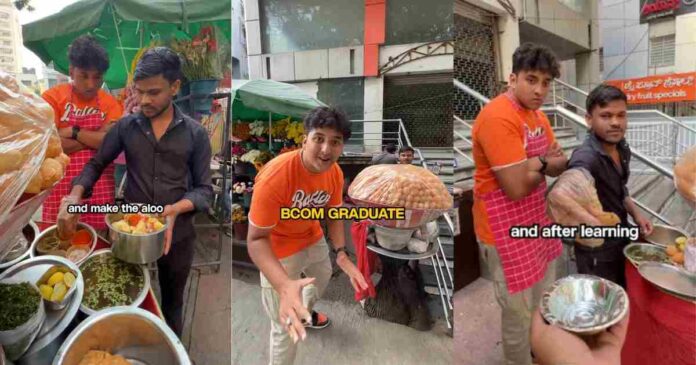
A viral video claiming that a simple pani puri stall can generate ₹90,000 per month in profit has taken social media by storm in March 2026, triggering a heated debate about the actual earnings of street food vendors in India. The clip, which shows a vendor enthusiastically explaining his business model, has left many impressed by the potential hustle, while others call the numbers highly exaggerated or unrealistic.
In the video, the vendor (whose location is not clearly mentioned but appears to be in a busy urban or semi-urban area) breaks down his daily sales and costs. He claims to sell 300–400 plates of pani puri per day at ₹20–30 per plate. After subtracting the cost of ingredients (puri, potatoes, spices, water, etc.), he says his net profit comes to around ₹3,000 per day, which adds up to approximately ₹90,000 per month.
He proudly states that with low overheads (mainly a small cart, gas, and minimal rent for the spot), the business offers good returns and flexibility. The energetic narration and confident numbers made the video highly shareable, quickly crossing lakhs of views.
Why It Went Viral
The claim struck a chord for multiple reasons:
- Aspiration vs Reality: Many young people struggling with 9-to-5 jobs or low-paying salaried roles saw it as proof that street entrepreneurship can be lucrative.
- Street Food Romance: Pani puri (golgappa) is one of India’s most loved and affordable street snacks. The idea that selling it could yield such high returns felt inspiring to some and suspicious to others.
- Economic Context: With rising inflation, job market uncertainty, and growing interest in side hustles, the video tapped into the current mood of “be your own boss.”
Divided Reactions on Social Media
The internet’s response has been sharply split:
Supporters & Inspirational Takes
- “This is a real hustle! No degree, no office, yet earning better than many graduates.”
- “Respect to street vendors – they work harder than most corporate employees.”
- “If this is true, more people should start small food businesses instead of crying about jobs.”
Sceptics & Reality Check
- “₹90,000 profit per month from pani puri? Highly exaggerated. Rent, spoilage, competition, and daily costs eat into margins.”
- “Even in prime locations, consistent 300–400 plates daily is tough. Most stalls make far less.”
- “This looks like motivational content or clickbait to sell courses on ‘how to earn 1 lakh from street food’.”
Some food business owners and accountants joined the discussion, providing rough calculations:
- Cost per plate: ₹8–12 (puri, filling, chutneys, water).
- Selling price: ₹20–30.
- Daily sales needed for ₹3,000 profit: realistically 250–350 plates on good days.
- Monthly profit after rent, gas, labour, spoilage, and off-days: usually ₹30,000–₹60,000 in good locations, rarely touching ₹90,000 consistently.
The Bigger Picture: Street Vendor Economics in India
Street food remains one of the largest unorganised sectors in India, employing millions. While some popular stalls in busy markets or near colleges do earn well, the majority operate on thin margins due to:
- High competition
- Weather dependency
- Perishable ingredients leading to wastage
- Rising raw material costs
- Uncertain daily footfall
- Lack of formal loans or insurance
Successful vendors often succeed through consistency, hygiene, unique taste, and prime location rather than just high volume.
The viral video has also sparked conversations about:
- The glamourisation of street businesses vs the ground reality.
- The role of social media in creating unrealistic expectations.
- Whether such content motivates genuine entrepreneurship or just clicks.

