
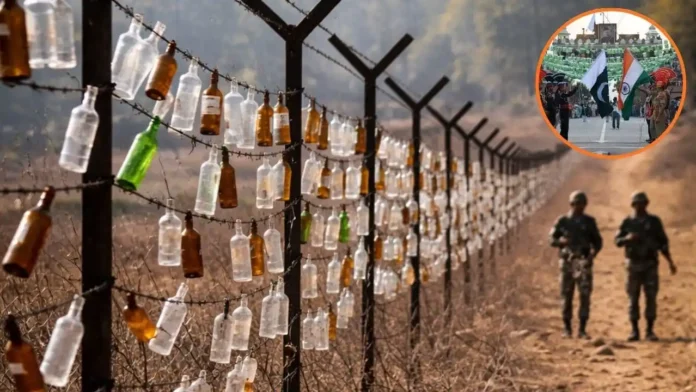
The India-Pakistan border stretches over 3,323 kilometres through deserts, plains, rivers, mountains, and farmlands – one of the most heavily guarded frontiers in the world. Tall barbed-wire fences, floodlights, cameras, motion sensors, and BSF (Border Security Force) patrols keep watch 24/7 against infiltration, smuggling, and other threats. Amid all the high-tech gear, one simple, low-cost feature often catches attention in photos and videos: rows of empty glass bottles tied along sections of the fence, especially in rural and desert areas of Punjab, Rajasthan, and Jammu.
At first glance, they appear to be discarded trash or random decorations. But these humble bottles are a clever, time-tested intrusion alert system – a DIY alarm that has proven remarkably effective for decades.
How the Glass Bottle Alarm Works
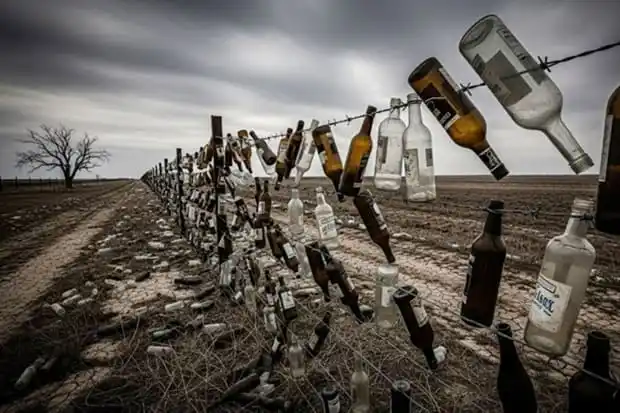
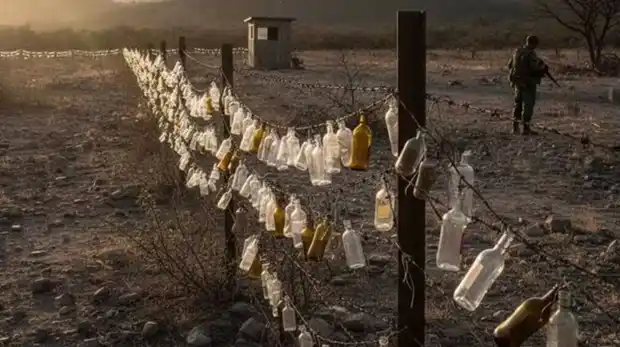
Border Security Force (BSF) jawans tie empty glass bottles (usually soda or liquor bottles) close together along the barbed wire using rope or wire. Here’s the genius:
- Normal wind: Bottles gently clink against each other and the metal fence, creating a soft, rhythmic background sound that’s easy for patrolling soldiers to filter out as “normal.”
- Tampering or intrusion: If someone tries to cut the wire, climb over, crawl under, shake the fence, or even brush against it while sneaking through, the bottles collide forcefully.
- Result: A sharp, loud clinking or crashing sound echoes across the quiet night – especially in remote, silent stretches where even small noises carry far.
- Alert: Nearby BSF personnel, trained to recognise the distinct disturbance, immediately investigate. The noise acts as an early warning, giving guards precious seconds to respond.
This method shines in fog-heavy winters (common in Punjab and Jammu), where visibility drops to near zero, and high-tech cameras/sensors can fail due to weather, power issues, or terrain.
Why Glass Bottles? Practical Advantages
- Zero cost & easy availability: Empty bottles are abundant in villages near the border – no need for expensive procurement.
- No electricity or maintenance: Unlike sensors, CCTV, or lasers (which cost lakhs and need constant power/batteries), bottles work 24/7 in rain, fog, snow, or heat.
- Weather-proof & durable: Glass withstands harsh outdoor conditions without degrading quickly.
- Sharp, unmistakable sound: The clink is unique and travels well in still air – hard to ignore at night.
- Low-tech reliability: In vast rural stretches, farms, riverine areas, or mountains where full electronic coverage is impractical, this simple hack supplements modern systems perfectly.
BSF sources have confirmed this tactic is used specifically in fog-prone and remote sectors where tech can be unreliable. It’s not the primary defence – drones, thermal imaging, and barbed wire do that – but a smart, cheap backup layer that has saved lives and prevented breaches.
Historical & Strategic Context
The India-Pakistan border (also called the Radcliffe Line post-1947 partition) has seen decades of tension, smuggling, and infiltration attempts. Advanced systems cover key urban sectors, but rural and desert stretches rely on human vigilance + low-cost innovations like this.
Similar tricks are used along the India-Bangladesh borders too – bottles, tin cans, or bells tied to fences. It’s a classic example of “jugaad” security: resourceful, frugal, and surprisingly effective.
Photos from the border often show these bottles glinting in sunlight or swaying in the wind – a quirky sight that surprises tourists and visitors until the purpose is explained.
Public Reactions & Fun Facts
When viral photos or videos surface (like recent ones in February 2026), netizens react with surprise:
- “Genius low-tech hack!”
- “Jugaad at its best – bottles > billion-rupee sensors in fog”
- “BSF using everything available – respect”
It’s also a reminder that not all security needs satellites or AI – sometimes a ₹10 bottle does the job better.
Quick Facts: Glass Bottles on the India-Pakistan Border
| Aspect | Details |
|---|---|
| Length of Border | 3,323 km (through deserts, plains, rivers, mountains) |
| Primary Force | Border Security Force (BSF) |
| Main Areas Used | Punjab, Rajasthan, Jammu (fog-prone & rural stretches) |
| How Hung | Tied close together on barbed wire with rope/wire |
| Sound Trigger | Tampering, climbing, cutting, or brushing fence |
| Advantages | Zero power, cheap, weather-proof, long-distance audible |
| Modern Complement | CCTV, thermal cameras, motion sensors, drones |
This simple yet brilliant tactic shows how innovation and necessity create effective solutions in challenging environments. Next time you see a photo of bottles on the border fence, you’ll know – they’re not trash; they’re silent sentinels! 🛡️🍾

