
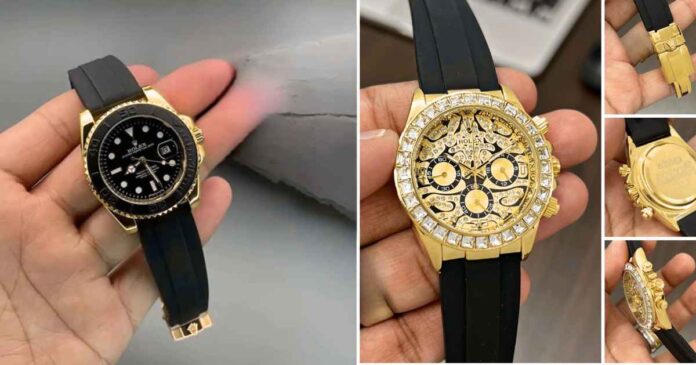
The founder of a Delhi-based company was surprised by the ultra-wealthy businessman’s response when he congratulated him on his Rs 25 lakh Rolex watch: the businessman acknowledged it was a “first copy.” The admission has sparked a discussion about whether luxury is about perception, status, or craftsmanship.
In a LinkedIn post, Rohan Dhawan, the founder of Delhi-based UAbility, described his meeting with the billionaire. He saw what seemed to be a two-tone Rolex Daytona worth more than Rs 25 lakh when he recently met the individual whose net worth is close to Rs 500 crore.
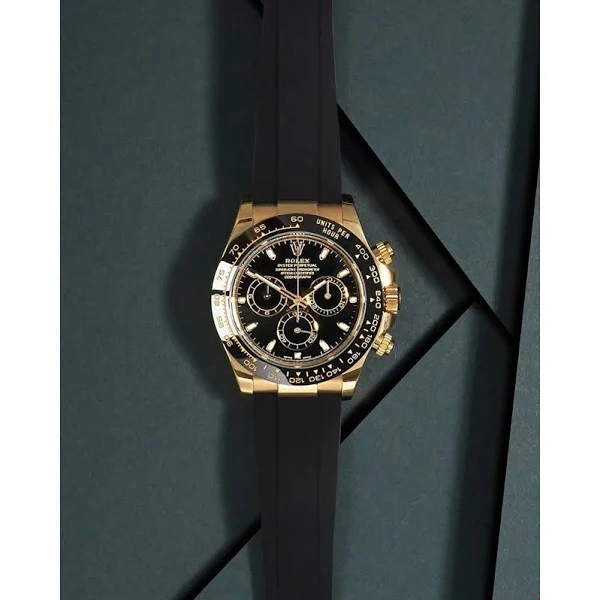
Rohan told the merchant that the watch was something he had coveted for years. But the businessman chuckled before disclosing that it was a “first copy” that he had bought from an Instagram site for Rs 10,000.
Before Rohan could ask why, the businessman expressed his thinking himself. “Where I’m sitting today, people never even assume it could be phoney. It does the task for me, displays the time, and receives praise. So why spend that kind of money on a real one?” he added.
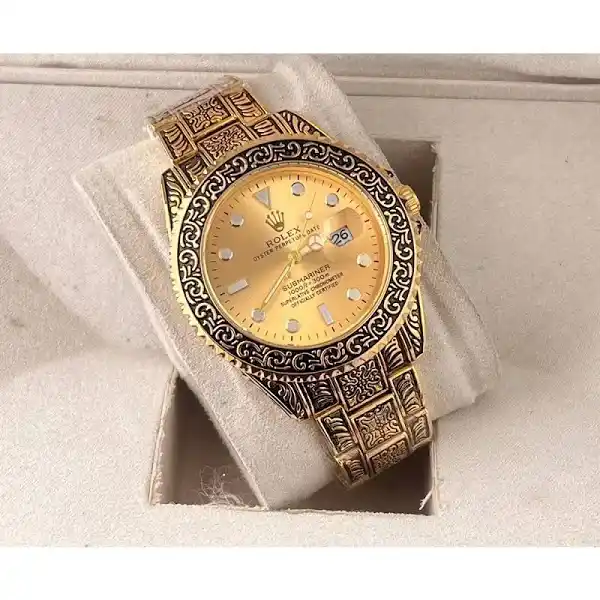
Rohan was conflicted by the explanation. While he insisted that he would rather possess fewer things and have them be real, he said the exchange did not leave him with “a clean answer.”
Additionally, he contended that people frequently evaluate luxury based more on the wearer than the item. “The watch did not earn the compliment. His net worth did,” he wrote, before asking users whether they buy luxury for its craftsmanship, heritage or something else entirely.
Hundreds of people responded to the post, and many of them agreed that whether authenticity even counts depends on the reason for possessing a premium item.
Several individuals expressed the opinion that the businessman had only optimised for perception rather than ownership, pointing out that he had no intention of owning the original watch but rather of achieving the same social signal. They said that the talk was made more fascinating by his candour about the watch being a fake.
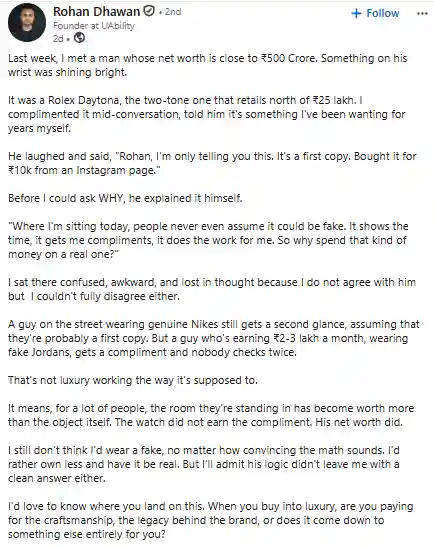
Not everyone was persuaded. Although watch enthusiasts acknowledged that they appreciated the businessman’s reasoning, they contended that the pleasure of owning a high-end watch comes from the item itself rather than the praise it receives.
Many stated they would still prefer an actual watch—or even a less expensive brand—over a fake luxury model, even though they acknowledged that someone of his prominence would be admired regardless of what he wears.
Others argued that luxury has always served as a status symbol, extending the conversation beyond timepieces. They believe that a person worth hundreds of crores no longer needs pricey accessories to demonstrate their achievement because their reputation speaks for itself.

