
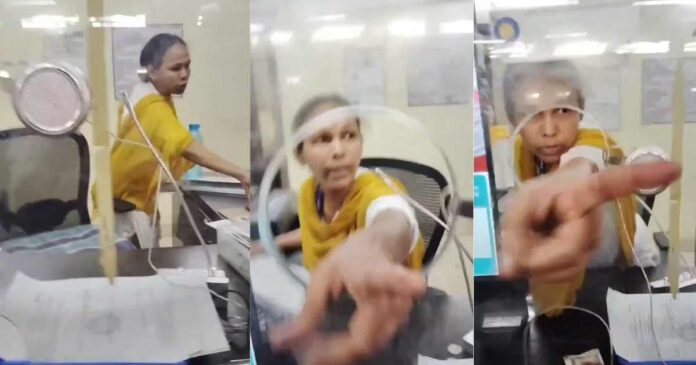
A heated confrontation at an Indian Railways station has gone massively viral in April 2026 after a woman clerk stopped a passenger from filming their argument over a ticket delay. The video, which shows the clerk visibly agitated and asking the passenger to stop recording, has triggered intense debate online about passenger rights, staff behaviour, and the increasing trend of filming public officials during disputes.

The incident reportedly occurred at a busy railway station (exact location not confirmed in most reports but believed to be in North India). The passenger was arguing with the clerk about a delayed or wrongly issued ticket when he began recording the interaction on his phone. The woman clerk immediately objected, telling him to stop filming and accusing him of creating unnecessary drama.

What the Viral Video Shows
In the short clip (about 30–45 seconds long):
- The passenger is seen arguing with the female clerk behind the counter about his ticket issue.
- He raises his phone to record the conversation.
- The clerk becomes visibly upset, raises her voice, and tells him firmly: “Phone band karo, recording mat karo” (Switch off the phone, stop recording).
- She appears agitated and gestures for him to put the phone away while continuing to explain the ticket matter.
- The passenger insists on his right to record, leading to further escalation in tone.
- Other passengers can be seen watching the exchange, with some trying to intervene or calm the situation.

The video ends abruptly without showing how the argument was resolved, but the clerk’s strong reaction to being filmed has become the focal point of discussion.
You go to buy a simple ticket… and end up stuck in a never-ending game of delays and excuses.
— The Nalanda Index (@Nalanda_index) April 21, 2026
A passenger got into a fierce argument with a railway clerk after allegedly being harassed in the name of OTP and payment. According to him, the process was dragged unnecessarily and… pic.twitter.com/5xwxhDMnnr
Public Reaction: Deeply Divided
The clip has received a polarised response online:
Support for the Clerk / Against Filming
- “Clerks are also humans under pressure. Constantly being filmed creates stress.”
- “Not every argument needs to be recorded for social media clout.”
- “Passenger was probably creating unnecessary scene for views.”
Support for the Passenger / Right to Film
- “Citizens have every right to record public servants performing their duty.”
- “If there was no wrongdoing, why stop the recording?”
- “This is how accountability is maintained – staff should allow filming.”
Many users also pointed out that filming public officials is increasingly common as a safeguard against misconduct, but it can sometimes escalate situations unnecessarily.
Legal & Railway Perspective
Under Indian law, there is no blanket ban on filming government officials in public spaces performing their duties, as long as it does not obstruct official work or violate privacy laws. However, railway authorities often discourage filming inside stations or ticket counters for security and operational reasons.
Indian Railways has guidelines asking passengers to cooperate with staff and avoid unnecessary confrontation. In cases of disputes, passengers are advised to use the official 139 helpline or file complaints through proper channels rather than escalating on the spot.
No official statement from Indian Railways or the specific station has been released yet regarding this incident.
Broader Context: Rising Passenger-Staff Confrontations
Incidents of arguments between passengers and railway staff have increased in recent years, often going viral due to widespread smartphone use. Common triggers include:
- Ticket delays or cancellations
- Overcrowding and seat disputes
- Perceived rude behaviour from either side
While some confrontations highlight genuine grievances, others are seen as unnecessary escalation for social media attention. This particular video has added to the conversation about balancing transparency with respect for frontline workers who often operate under high pressure and heavy workloads.

