
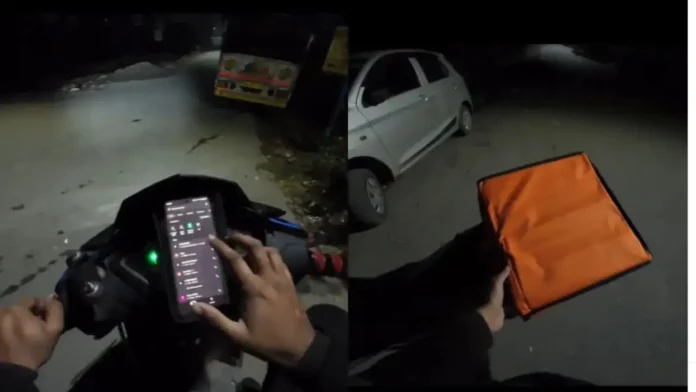
A short but powerful viral video shared on Instagram has sparked widespread discussion about assumptions, dignity, and bias in everyday India. Posted by delivery agent Fardeen Khan (@fardeenonduty_ on Instagram), the clip shows a rider arriving at a delivery spot and discovering that the customer – whom he initially described as a “beggar” lying on the roadside under a single blanket – had ordered food online and even tipped him ₹50.
The moment the man calmly confirms the order and hands over the tip, the agent’s surprise is evident. The exchange quickly went viral in early February 2026, racking up over a million views, 68,000+ likes, and hundreds of comments debating whether it’s a genuine heartwarming incident or a cleverly scripted reel for engagement.
What the Video Shows: Step-by-Step Breakdown
The footage, filmed from the delivery agent’s perspective:
- The rider reaches an unfamiliar roadside location and calls the customer to confirm.
- He spots a man lying on the ground covered with a thin blanket and remarks in surprise/humor: “Arre, yeh toh bhikhari ne order kiya hai” (Oh, this beggar has ordered food).
- When the man sits up and confirms he’s the customer, the agent agrees it’s fine, saying something like “Haan bhai, kyun nahi” (Yes bro, why not).
- The man takes the food packet and hands over a ₹50 note as a tip.
- The agent looks visibly stunned, pausing in disbelief before reacting.
- The clip ends with the rider’s narration or text overlay highlighting the twist.
No specific food item or platform (Zomato/Swiggy) is mentioned, keeping the focus on the human interaction.
Here are key visuals from similar viral delivery surprise moments that capture the essence of the shock factor:
And a representative image of roadside food delivery in India for context:
Key Quotes & Social Media Reactions
The video triggered emotional responses:
- Supportive: “Bhai wo dil se gareeb nahi hai, lekin aapne apni soch dikha di unhe bhikhari bol kar” (He may not be poor at heart, but you showed your mindset by calling him a beggar).
- Praise for the man: “Bhai wo alag hi level ka banda tha” (That guy was on another level).
- Gratitude: “Let the poor man eat. Credit to him that he even gave a tip.”
- Skepticism: “Scripted of course,” “Sounds scripted,” “Bloody beggar Tamil movie scene 😂” (referencing dramatic films).
Many highlighted the deeper message: Don’t judge people by appearances. A person living simply on the street can still afford basic comforts and show generosity. The ₹50 tip – small but meaningful for a gig worker – added emotional weight.
Real or Scripted? The Debate Rages
Fardeen Khan regularly posts “shocking” delivery stories, leading many to suspect staging for views. Common arguments:
- Pro-real: The agent’s natural surprise, roadside authenticity, and relatable gig-worker perspective.
- Pro-scripted: Perfect timing, dramatic reveal, and Fardeen’s history of similar “twist” videos.
- Neutral: Even if staged, the message about bias and dignity is valuable.
Times Now noted it could not independently verify authenticity, emphasizing the clip’s role in sparking conversations on societal assumptions.
Broader Context: Gig Economy, Dignity & Viral Content
Delivery agents often face long hours, low tips, and unpredictable locations. Stories of generous customers – especially from unexpected backgrounds – go viral as feel-good content. This one flips the script: the “beggar” becomes the kind tipper, challenging stereotypes.
It also touches on urban poverty: Many roadside dwellers in India have smartphones and use apps for essentials, yet face constant judgment.
As of February 2, 2026, the video keeps trending with mixed reactions – some calling for empathy, others questioning content creation ethics.

