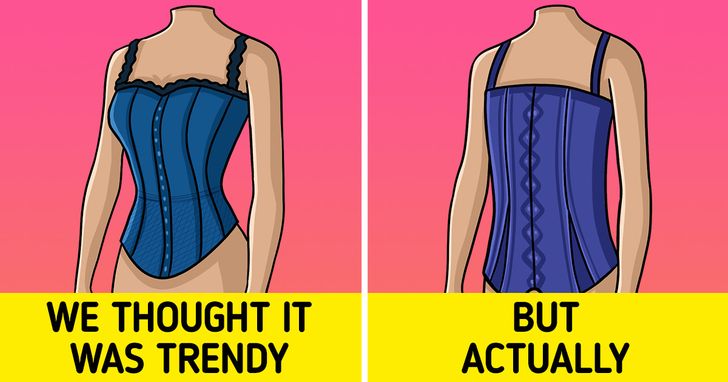
Fashion, no matter how outlandish, has a habit of reappearing at some point. For example, Charlize Theron’s blue dress in Snow White & the Huntsman was adorned with bug wings. And it wasn’t just some wild notion from the designers; it was a replica of a fashion trend from the early 1800s.
To be fashionable in the nineteenth century, people had to walk with a limp.
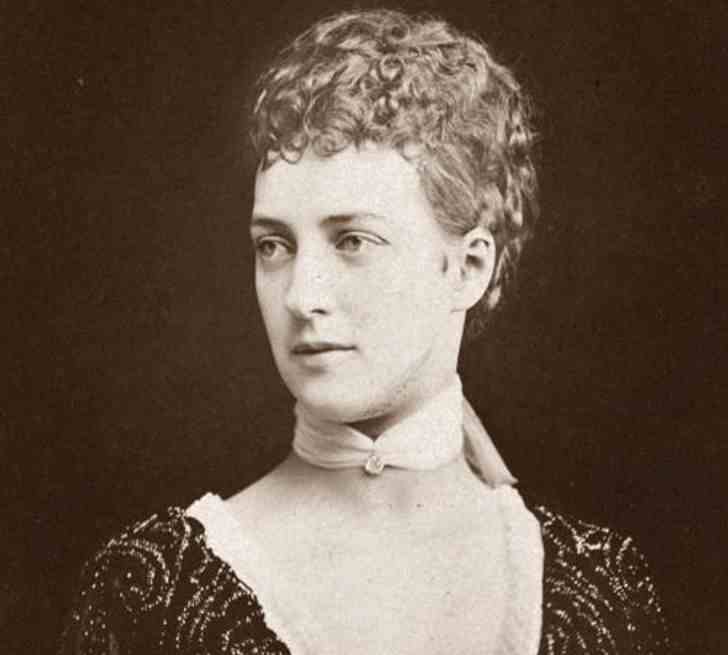
The wife of the Prince of Wales, Alexandra of Denmark, was a Victorian fashion star. A number of ladies imitated her attire. Many other women wore the choker she wore to conceal her scar on her neck. And when she developed rheumatism in 1867, which caused her to walk with a limp, all of the other fashionable women began going around London with canes for no apparent reason. Limping became so fashionable that some manufacturers began manufacturing shoes with various heel heights to make walking with a limp easier.
Ladies stopped limping and began taking very little steps instead.
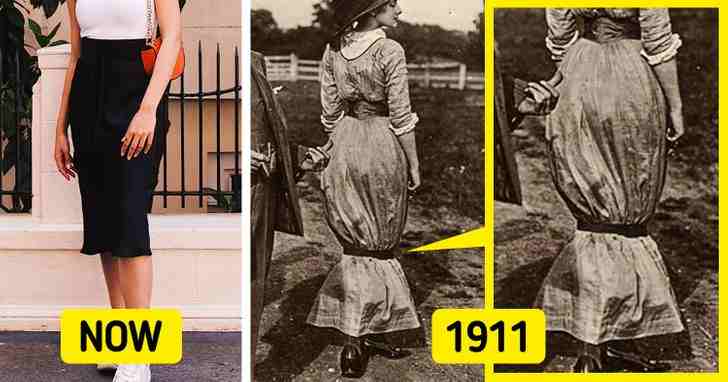
From 1908 until 1914, fashionable women began to wear tight skirts. Edith Ogilby Berg is thought to have influenced the designer to make this skirt. Berg was the first American woman to travel as a passenger on an aeroplane, and she used a rope to tie her skirt around her ankles to keep it from flying away.
This dress was extremely hazardous; it was difficult to run, walk, or even sit in it because it was so easy to fall. To avoid damaging the fabric, some women even tied their knees with a rope.
In the 1960s of the twentieth century, toilet paper producers persuaded ladies that paper costumes were fashionable.
Embed from Getty ImagesToilet paper, paper towels, and napkins were already being purchased. Was there any way to get them to spend even more money on paper that they didn’t need? Yep! Simply turn paper attire into a fashion trend! When Scott Paper Company began creating $1.25 paper dresses in 1966, this was most likely their intention.
Other companies followed suit, producing paper garments for children, wedding gowns, and even raincoats and bikinis that could only be worn twice or three times. Mars Hosiery, at the height of the fad in the 1960s, produced 100,000 dresses every week. Even though they weren’t extremely durable, these clothing could keep you dry in light rain.
There was a lightning rod craze in Europe in the 18th century.
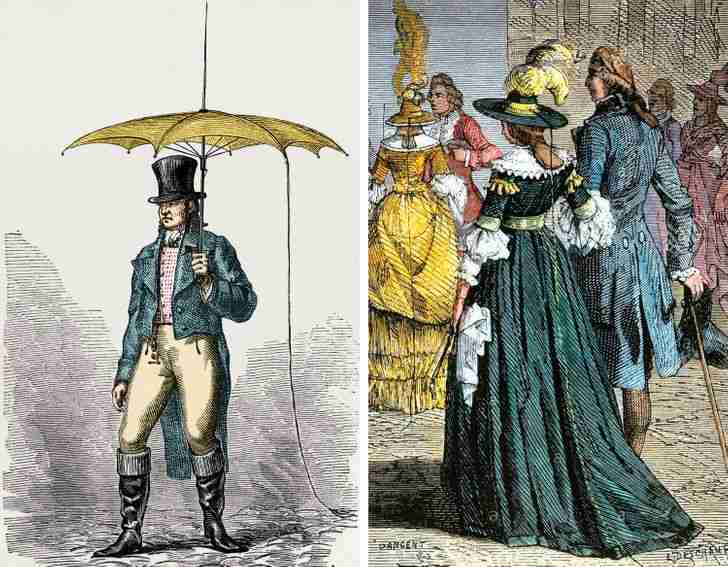
Benjamin Franklin invented the lightning rod in the mid-eighteenth century. Ladies and gentlemen began to wear hats and umbrellas with portable lightning rods at the turn of the century. A metal ribbon with a silver chain was added to women’s headwear. These chains would be hung behind the women’s backs and would be in contact with the earth. The power was meant to go into the ground once the lightning struck, protecting the hat owner.
Men wore umbrellas made of long rods with chains dangling from them. It’s noteworthy to note that lightning rods were not installed on structures until the next century.
Silver hair was removed from Roman women’s hair, and their hair was styled with specific needles.
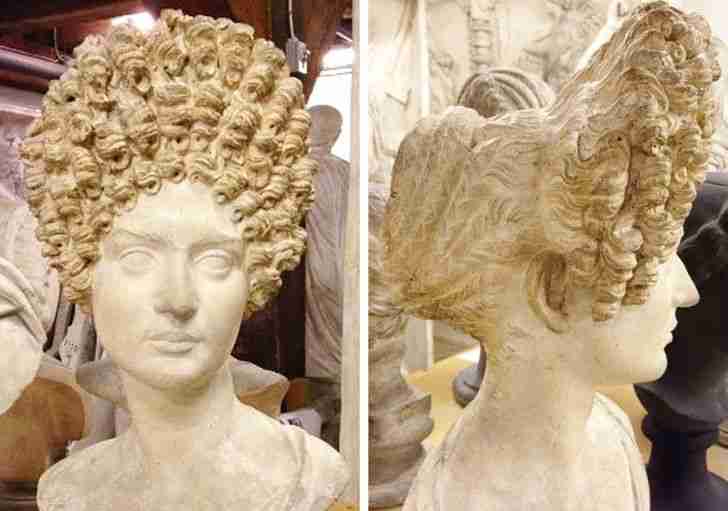
Ladies’s hairstyles in Ancient Rome were extremely complicated because they were a symbol of wealth and status: only wealthy women could devote so much time to their hair. Barbarians wore natural locks. Slave barbers cared for the hair of their owners. Pigeon droppings were used to brighten the hue. And their hair was dyed dark with rotting leeches. They used herbs and worms to make masks to keep their hair from becoming grey. The first silver hairs were just shaved off.
They also styled their hair using needles rather than hairspray.
Dandy men wore corsets and tight pants, and they spent a lot of money on their attire.
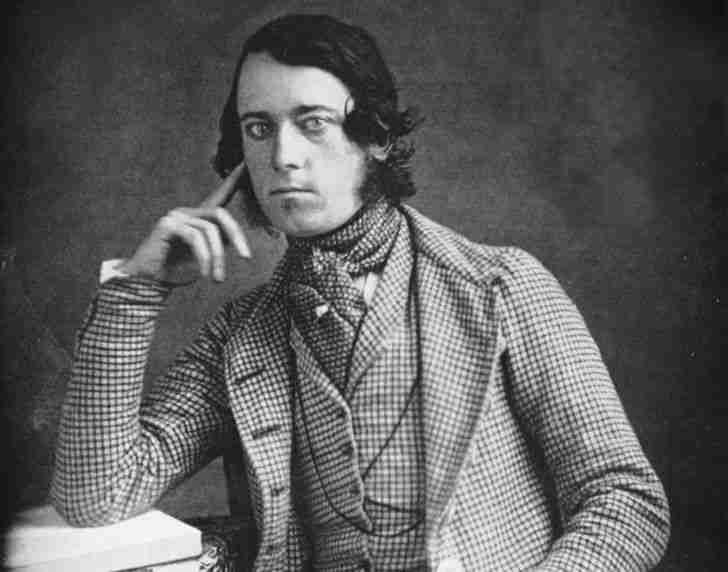
It wasn’t just women who had to bear the brunt of fashion’s wrath. Some gentlemen in the 18th and 19th centuries were so concerned with their appearances that they spent a lot of money on their clothing. Dandy guys wore harsh plastic collars and corsets to make themselves appear smaller. Their tight jeans also disrupted their blood circulation, causing their face and neck to expand and their eyes to puff up.
“They were made to fit me considerably tighter than my skin,” one of the 18th-century dandies said of his garments. Without the assistance of a tailor, it was difficult to get into them.” The pants took 30 minutes to put on and were quite difficult to move in.
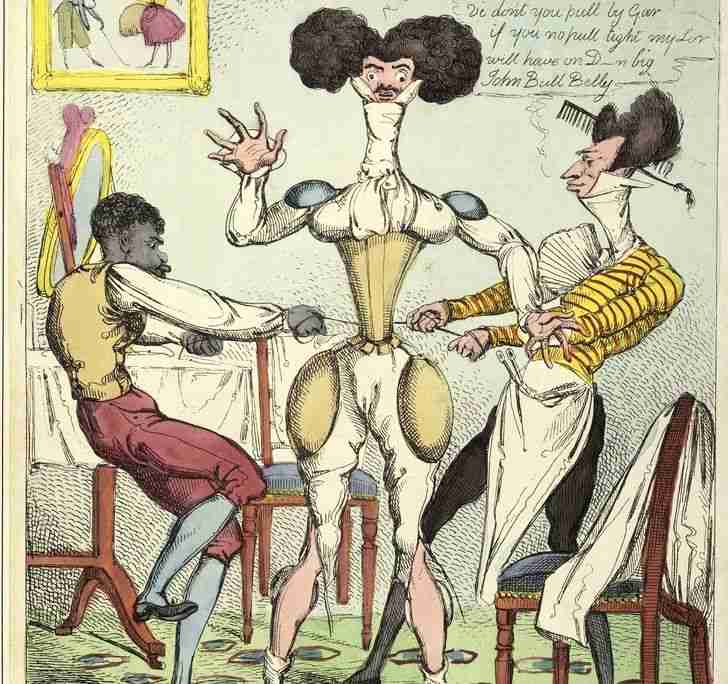
George Brummell, one of the most famous dandies, spent up to 10 hours getting ready and had to see three barbers: one for his temples, another for the back of his head, and a third for his forehead curls.
Scarred men were thought to be the ideal candidates for marriage.
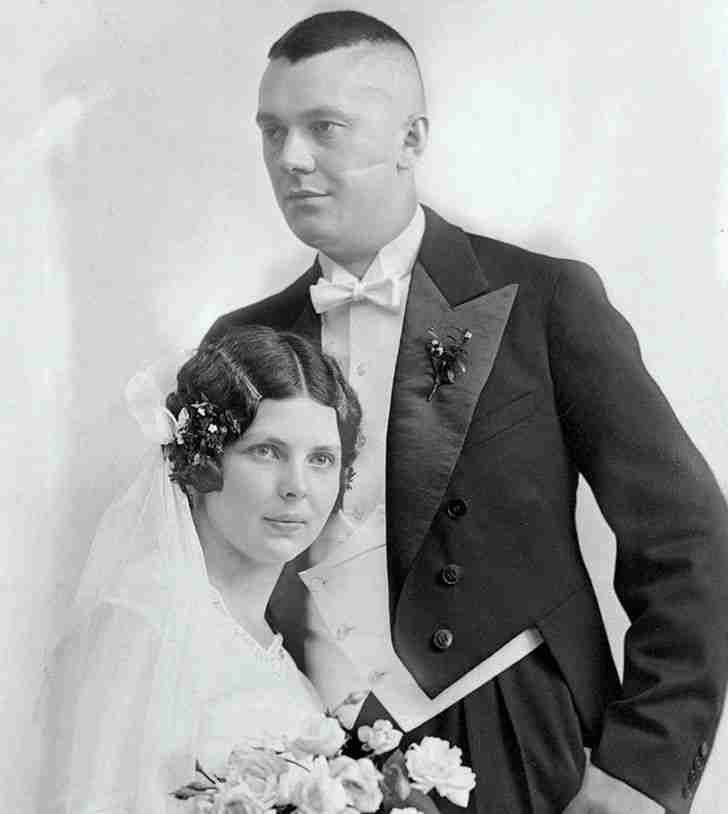
From the 1930s to the 1950s, having so-called duel scars was fashionable among Germans and Dutch. These scars indicated that males were suitable for marriage. The problem was that these scars were caused by males partaking in academic fencing, which could only be financed by the wealthy. Despite the fact that the scars were not harmful to their health, they were a testament to the owners’ bravery. Some males even attempted to create fake scars in order to appear more powerful.
Men wore cosmetics and masks at night in the 18th century.

While Brummell wished to seem elegant and avoid undue attention, his forefathers were not so reserved in their expression: in the 18th century, many men wore powdered wigs consisting of human hair, horse and sheep wool, and were dressed in satin, silk, and batiste, as well as wearing cosmetics.
To add contrast, they whitened their complexion, applied rouge to their cheeks and lips, and darkened their brows. Men also utilised face masks and lotions for freckles, as well as mouth fragrances and other beauty treatments.
Women in the 1920s attempted to flatten their br*asts.
In the 1920s, there were a lot of women in the West who defied social standards. They were referred to as flappers. These women were bold enough to invite men out, dress in sloppy clothes, unbuttoned coats, and have short hair. They wore bras that made their br*asts appear flat instead of corsets.
Flappers also wore corsets that flattened their figures, giving them a straight up and down appearance, as opposed to older corsets that emphasised the waist and bust. For a while, flat br*asts were fashionable.

Some fashionable women wore real beetle bits instead of jewellery.
People in Europe in the 19th century used beetle wings on rich fabrics imported from India. With these wings and silver threads, complete pictures could be created that looked fantastic in candlelight. It took a lot of work to make these clothes: one outfit took over 3,000 wings to make.
In 2009, young designer Holly Russel was inspired by this trend and created a blue chiffon dress for Lady Gaga with glittering beetle wings. It took her two weeks to complete it.