

An online conversation on how younger professionals saw money, career advancement, and work-life balance resulted from a Gen Z candidate turning down a Rs 1 crore job offer at the age because he did not want to work in what he perceived to be a toxic workplace.
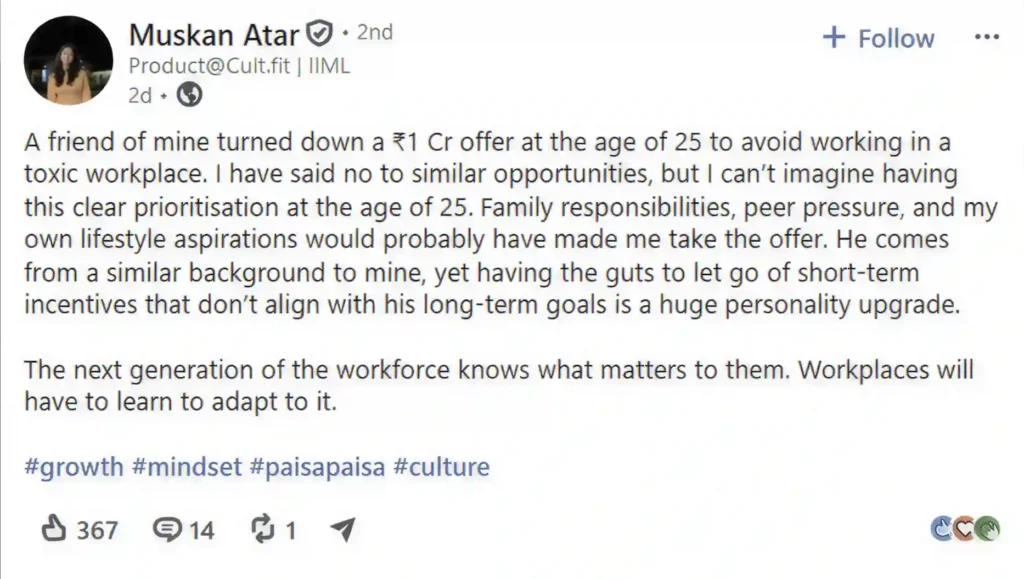
Muskan Atar told the tale on LinkedIn about a friend who, at a time when it could have been hard to turn down such a chance, decided to decline the rich offer.
Muskan stated that although she had previously declined similar opportunities, she could not fathom having the same clarity at the age of 25. She acknowledged that she might have accepted the money due to peer pressure, family obligations, and her own aspirations for her lifestyle.
She was especially impressed by her friend’s comparable upbringing and willingness to forgo the short-term financial gain because the position did not fit with his long-term goals.
The decision, according to Muskan, was an indication of shifting attitudes among younger professionals, implying that Gen Z employees were becoming more thoughtful about the type of workplace they desired rather than just going with the highest-paying option.
She maintained that businesses would eventually need to adjust to the demands of the next generation of workers, who were becoming more aware of what was important to them.
Reactions to the tweet were divided, too, with several people acknowledging that declining Rs 1 crore would be much easier said than done.
One commentator humorously stated that such offers should only be redirected to them because their middle-class attitude would not permit them to make such a decision, even at 45.
According to a different user, people who emphasise meaningful growth, wellbeing, and purpose over just recompense will increasingly alter the nature of work in the future.
Someone else, however, noted that it was simpler for those who had sufficient financial stability to go without a job for a while to walk away from such pay.
They contended that financial obligations might make declining a tempting offer much more difficult and that earlier generations frequently had the same freedom.

